
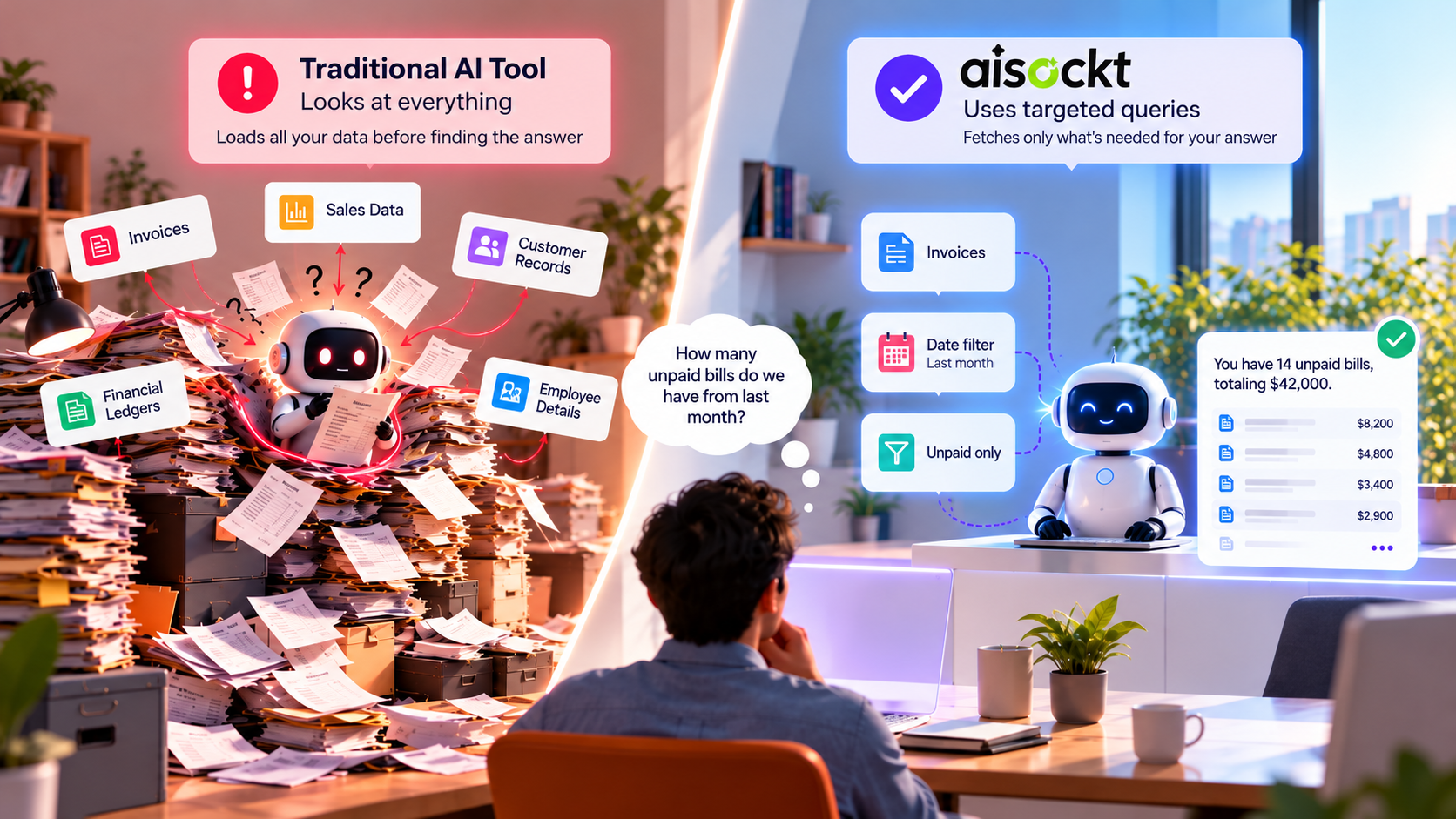
Imagine you hire a personal assistant. You ask them, "How many unpaid bills do we have from last month?" A good assistant checks the files, does the counting, and comes back with one clear answer: "You have 14 unpaid bills, totaling $42,000."
Now imagine a different kind of assistant. Every time you ask a simple question, they insist on hauling your entire filing cabinet into the room, dumping every folder onto the table, and reading through everything out loud, just to answer that one question.
Both assistants can get you the right answer. But one of them is doing something a little reckless with your paperwork. That second assistant is, unfortunately, how a lot of AI tools work today.
The problem hiding inside most "AI + your data" tools
When companies connect an AI model to their business data, their sales numbers, customer records, financial ledgers, the most common approach is simple: pull the relevant records, hand the whole batch to the AI model, and let it figure out the answer from there.
It works. But think about what's actually happening. If you ask "which invoices are overdue," a lot of tools will grab your entire invoice list, paid and unpaid, big and small, everything, and feed it all to the AI model, just so the model can sort through it and find the 14 that matter.
That means the model saw everything, even though you only needed to know about 14 records.
This isn't usually a mistake or carelessness on anyone's part. It's just the easiest way to build these tools quickly. But "easiest to build" and "safest for your data" are not always the same thing.
Why this matters more than it sounds
A single question like this might feel harmless. But think about how often your team might ask an AI assistant something during a normal week, dozens of times, maybe more. Every one of those questions, under the common approach, could mean your full records pass through an outside system again and again.
It's a bit like a bank teller who, every time you ask for your account balance, hands your entire file, including your address, your full transaction history, and your other accounts, to someone standing behind the counter, just so they can find the one number you asked for. You'd probably prefer they just told you the balance.
A better way: let the assistant ask a specific question, not read everything
There's a smarter way to do this. Instead of handing the AI model your whole filing cabinet, you can build a system where the AI model can only ask specific, pre-approved questions, and only ever gets back a specific, limited answer.
Think of it like a hotel concierge desk. You don't get to walk into the hotel's back office and read their guest records yourself. Instead, you ask the concierge a question, "is my room ready?", and they check the system and tell you exactly that, and nothing more. You never see the full guest list. You just get your answer.
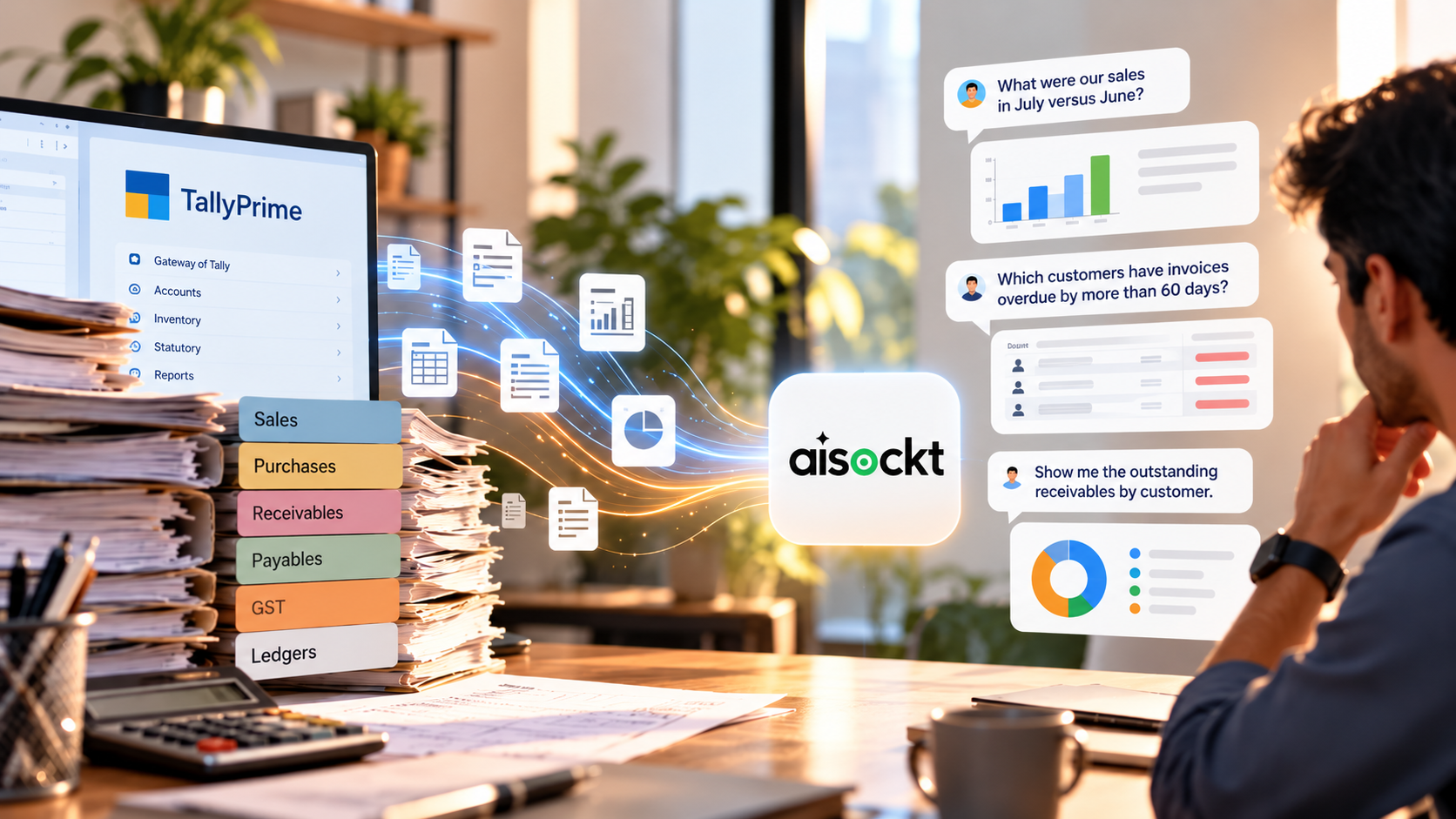
This is exactly how AiSockt works. When someone asks a question like "show me invoices over 30 days late," the AI model doesn't get handed your full ledger. Instead, it asks a specific, narrow question through AiSockt, and AiSockt looks up just that answer and hands it back, a short list of 14 invoices, nothing else. The AI model never sees your full financial records. It only ever sees the question and the answer.
Why this is worth caring about, even if you're not "technical"
You don't need to understand how AI works under the hood to care about this. You just need to ask one simple question about any tool that touches your business data: "What does this tool actually get to see?"
If the honest answer is "everything, every time, just in case", that's worth a second look. A better answer is: "only the specific thing it was asked, and nothing more."
That second answer is the whole idea behind how we built AiSockt. Your team gets fast, clear answers from AI - without your sensitive records ever needing to leave the room to get there.
Published on the AiSockt Blog, a resource for teams exploring how to use AI safely and affordably with their own business data.